
Forfeit Transactions and Connector Trees
- VTXOs and the Virtual Transaction Tree
The why, plus the Virtual Transaction Tree and Batch transaction concepts. - Forfeit Transactions and Connector Trees (you are here)
How you leave the Ark or keep a VTXO alive. - Out-of-Round Transactions
Also called OOR transactions or Ark transactions, along with Checkpoint transactions.
In the previous article we built up the Virtual Transaction Tree: how a VTXO sits as a leaf of that tree, how the whole tree hangs off a single Batch transaction, and how the batch output carries an expiry after which the operator can sweep the funds.
That expiry is really what makes this article necessary. You cannot simply sit on a VTXO forever and hope for the best.
There are a few actions a VTXO owner might want to take that also involve participating in a round.
-
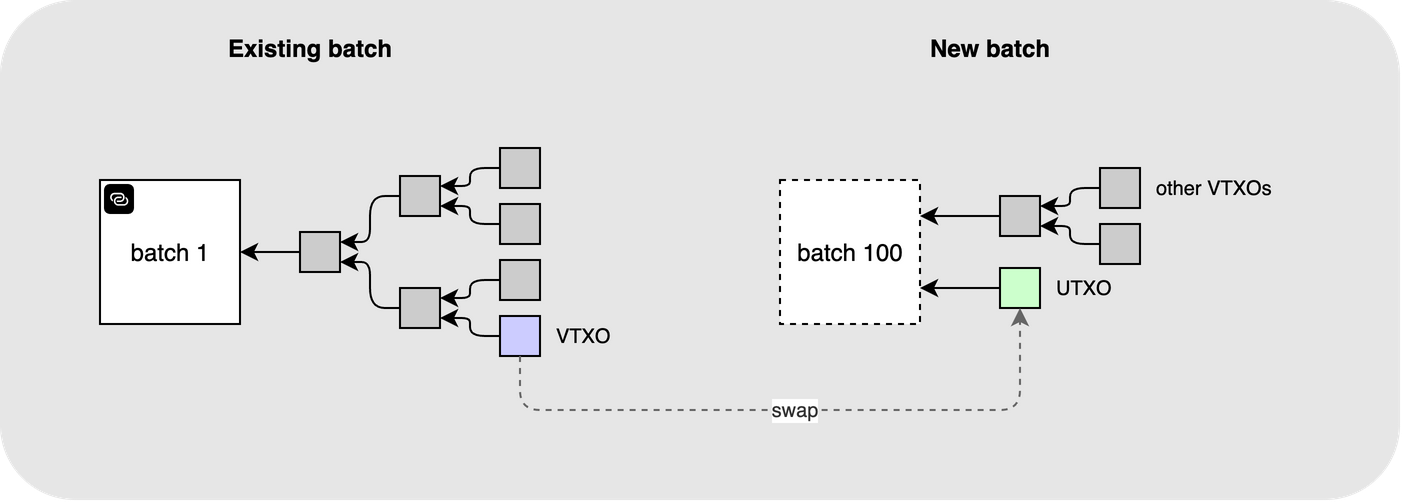
Leaving the Ark
This involves the exchange of VTXO(s) for UTXO(s). In other words, a user gives up (forfeits) a VTXO or set of VTXOs in exchange for a normal UTXO or set of UTXOs which will be normal outputs of a Batch transaction.
-
Refreshing a VTXO (Batch Swap)
As we've seen, a batch output paying to a VTXT has an expiry. Once the expiry is reached, the operator will be able to sweep all the funds of the output unilaterally and so participants with live VTXOs rooted in that tree will want to make sure they retain access to their VTXOs. They do so by performing a Batch Swap which involves giving up (forfeiting) ownership of their older VTXO in exchange for a new one in a new Batch.
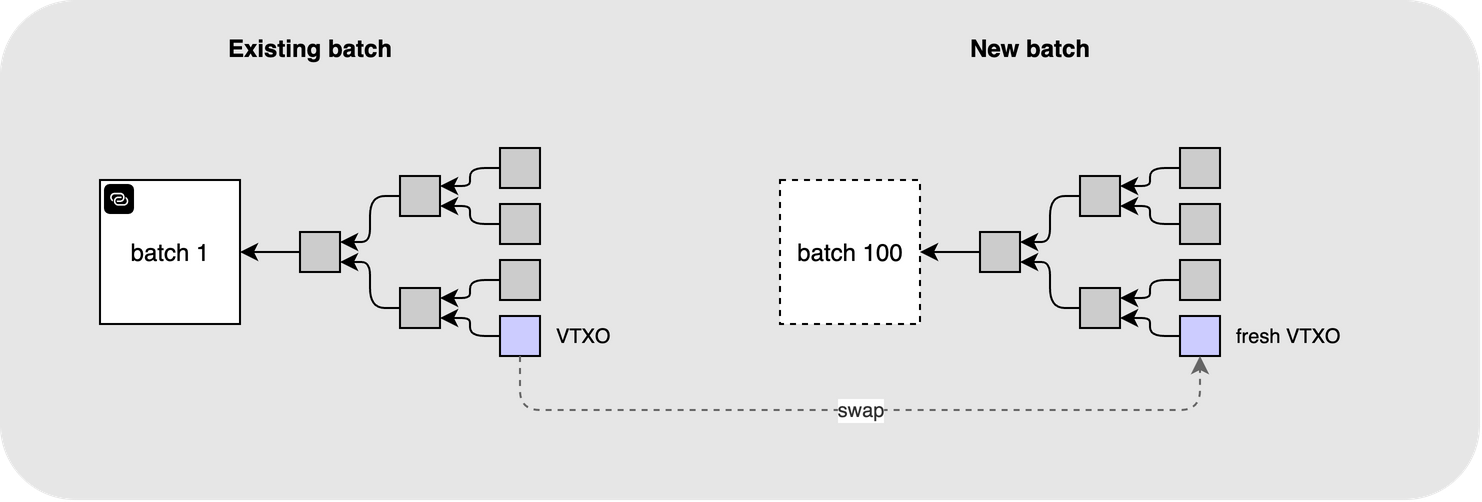
As you can see, both of these actions involve forfeiting a VTXO in exchange for some promise in a new Batch transaction (either a UTXO or a new VTXO). This process of forfeiting is quite involved and so we will dive into this process now. By the end of the explanation, you should understand what a forfeit transaction is along with what the purpose of a connector tree is and how the two in combination make the leave/refresh flows atomic and trust-less.
Batch Swap Example
Setting the scene
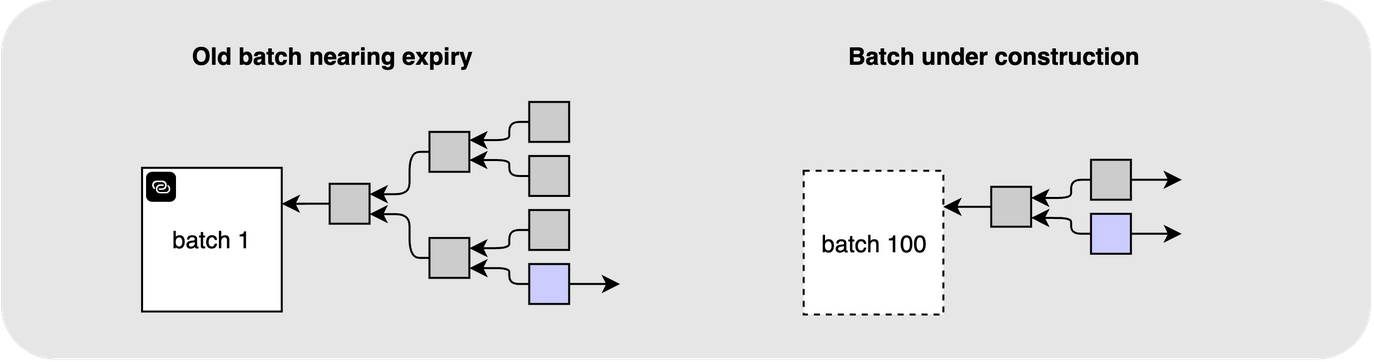
I'll use a Batch Swap example in order to demonstrate the forfeit process. In a Batch Swap, a user wants to exchange their existing VTXO for a fresh VTXO in a new Batch. So we have the current situation:
- A valid VTXO A in an existing, confirmed batch (batch 1)
- A new VTXO B in a new batch under construction (batch 100)
The outcome we do want
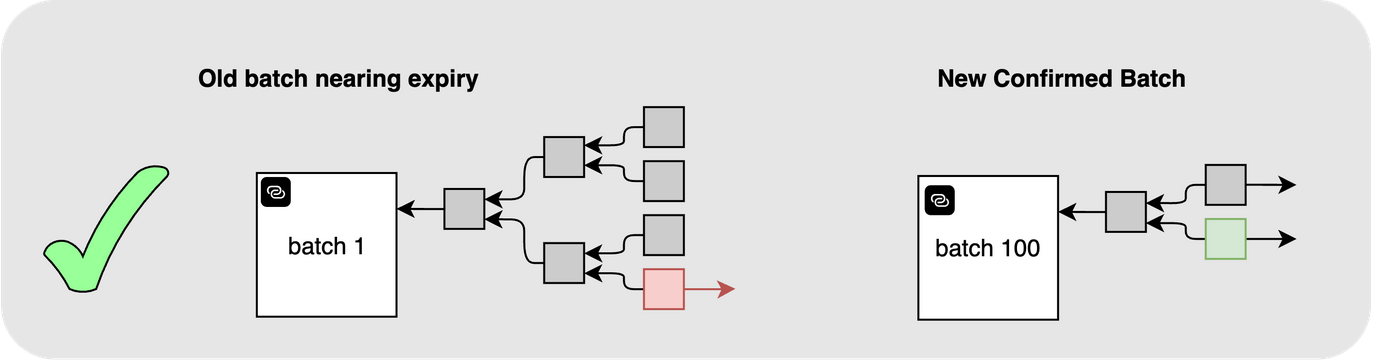
We want the outcome of the process to be the following:
- The VTXO A should be invalidated/forfeit and no longer useable by the owner. The owner should not be able to claim that VTXO on-chain by unilaterally exiting anymore.
- The VTXO B should be in the new confirmed batch and useable by the owner.
What we don't want as the Ark Operator
As the Ark Operator, we want to avoid the situation where the user ends up with two valid VTXOs where they can successfully unilaterally exit both VTXOs without any consequences.
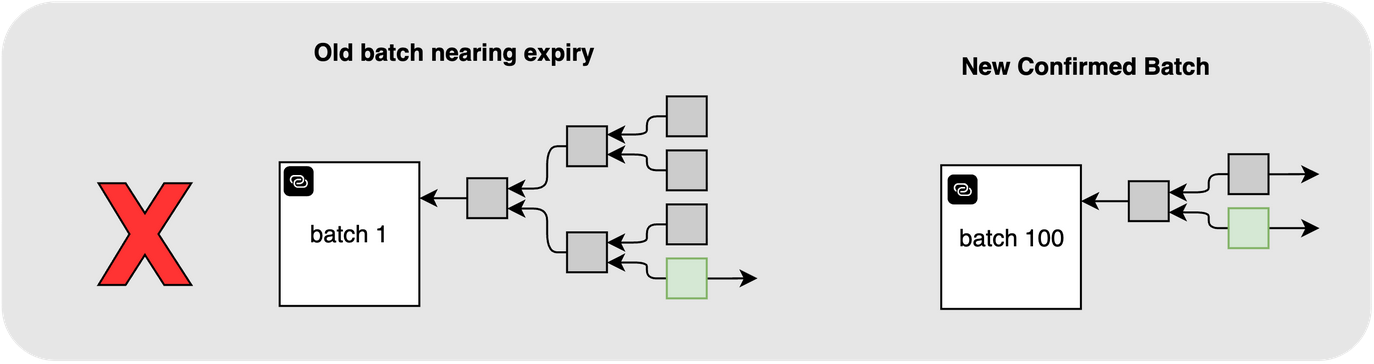
What we don't want as the user
As the user, we want to avoid the situation where the old VTXO A has been forfeit but the new batch with VTXO B never gets confirmed and so the user no longer has ownership of any live VTXO.
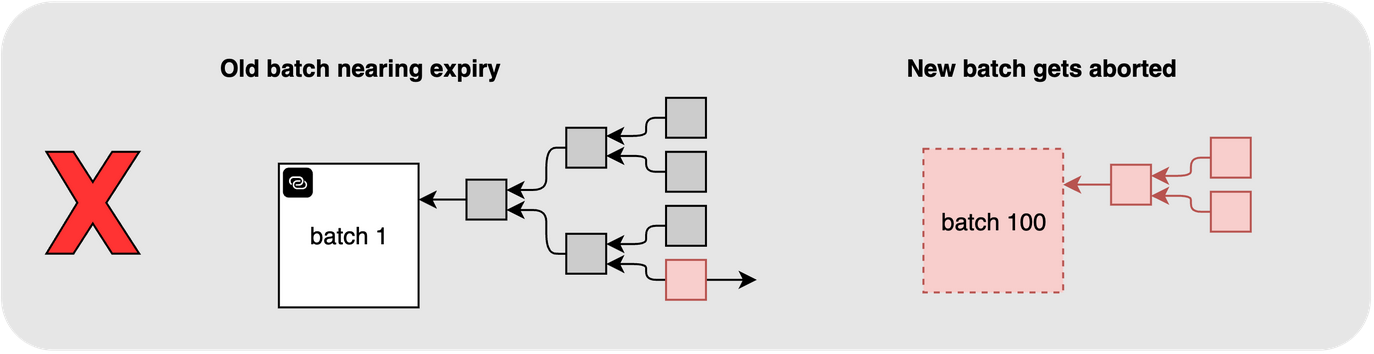
In other words, we need these two events to be atomic such that:
IF the new batch gets confirmed:
    THEN the old VTXO is forfeit and the new VTXO is active
ELSE IF the new batch is aborted:
    THEN the old VTXO remains valid
Enter Forfeit Transactions and Connector Outputs!
Connector Outputs
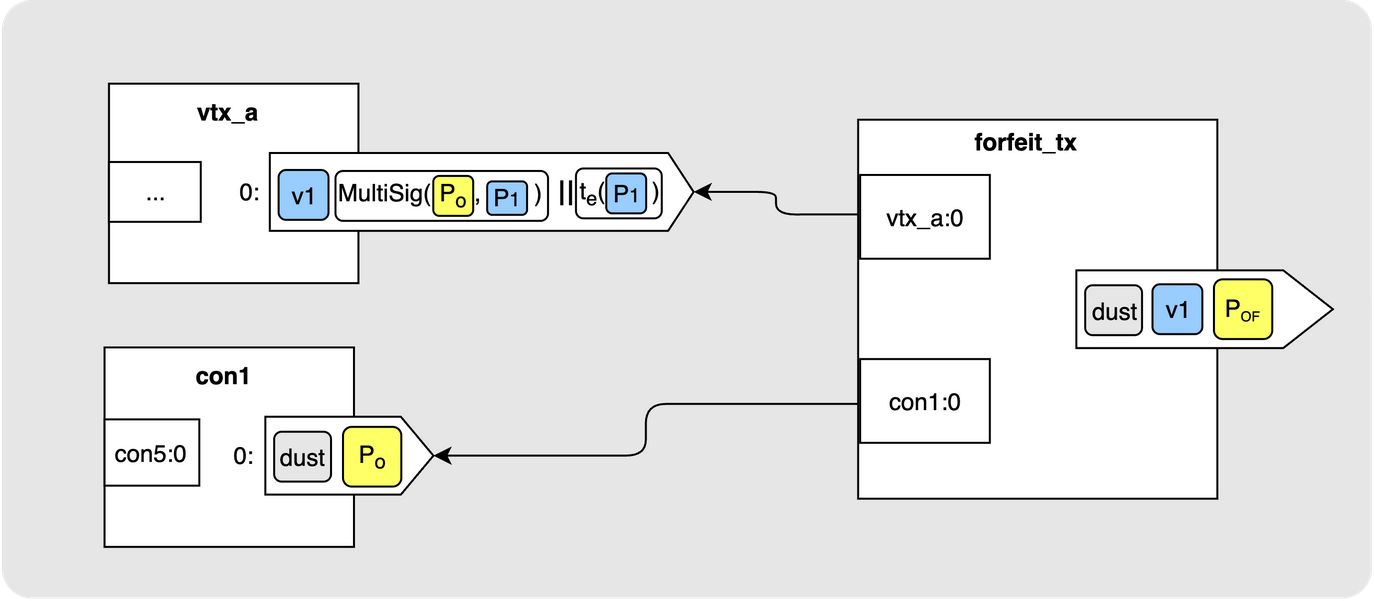
A forfeit transaction is a transaction that collaboratively spends a VTXO and sends the full value of the VTXO to the operator. The way that we make this atomic such that we satisfy all the conditions above is that we make this forfeit transaction not only spend from the VTXO in question but also from the new batch transaction. In other words we make it such that the forfeit transaction is meaningless/invalid if the new batch transaction never makes it on-chain since then one of the forfeit transaction's inputs is invalid.
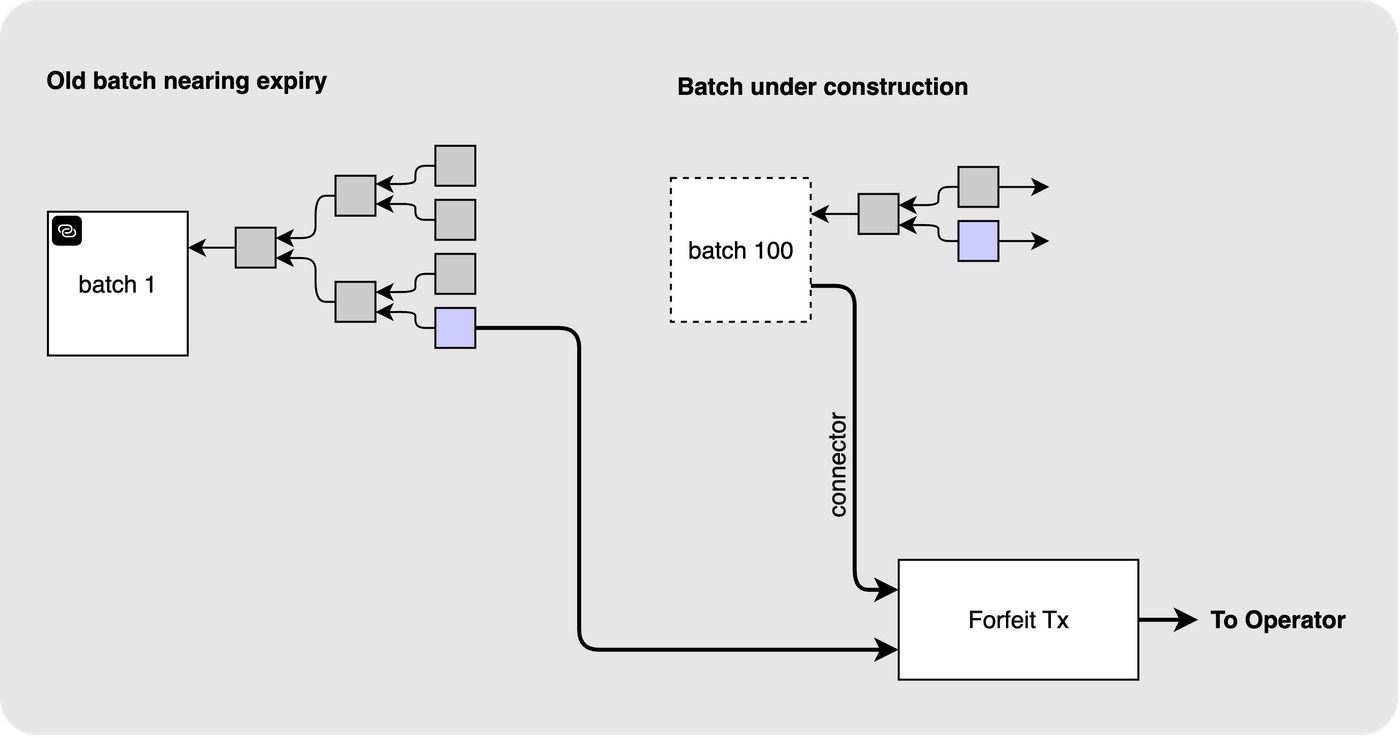
Let's run through those two examples from before again to see how this new construction saves both the user and operator.
In the first case where the user tries to unroll the forfeited VTXO A when the new VTXO B has already been activated in confirmed batch 100, the operator can just "correct" the state by broadcasting the forfeit transaction that the user would have signed which will sweep the funds giving the operator access to those funds and leaving the user purely with the value of the new VTXO B.
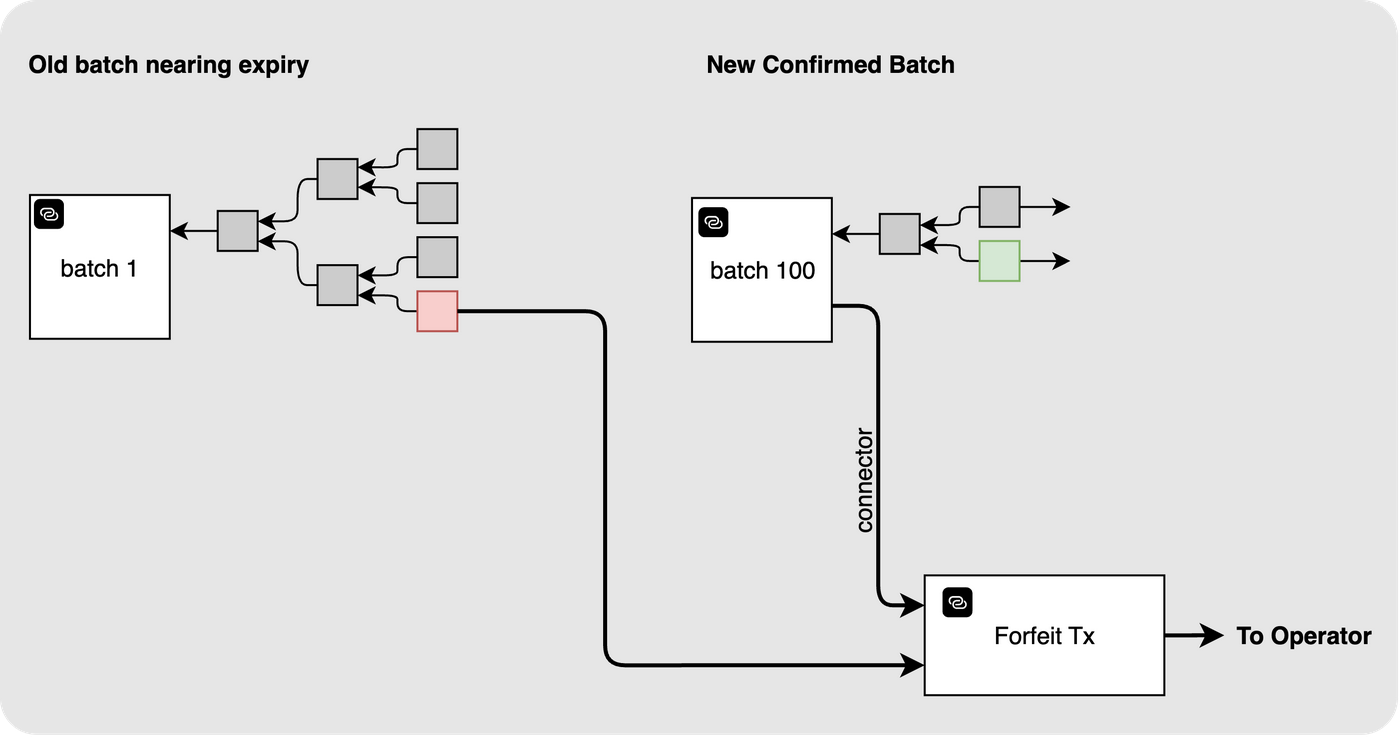
In the second scenario where the user has forfeited the VTXO A but the new batch never makes it on-chain, the user continues to have full access to the VTXO since the forfeit transaction is meaningless without batch 100 being on-chain.
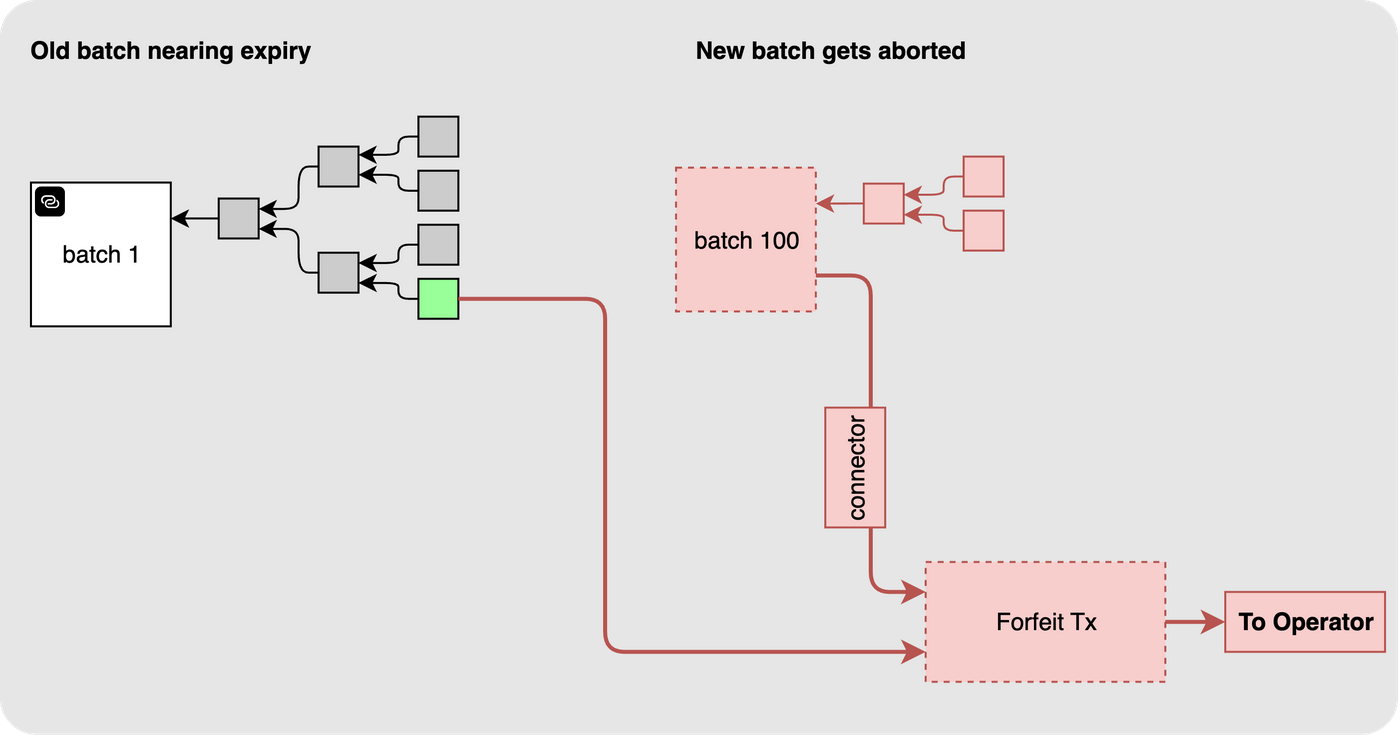
Connector Trees
Turns out, the virtual transaction tree construction has more use than just embedding VTXOs! The connector outputs are a necessary thing to have for the security model but in the vast majority of cases, we don't really ever expect them to be required (it is more their presence that is important) and so it is wasteful to have an explicit connector output on the batch transaction for every forfeit occurring. Luckily, we can re-use the VTXT construction to house these outputs! The only difference between the connector tree and the VTXO virtual tree is that all the outputs are fully owned by the operator.
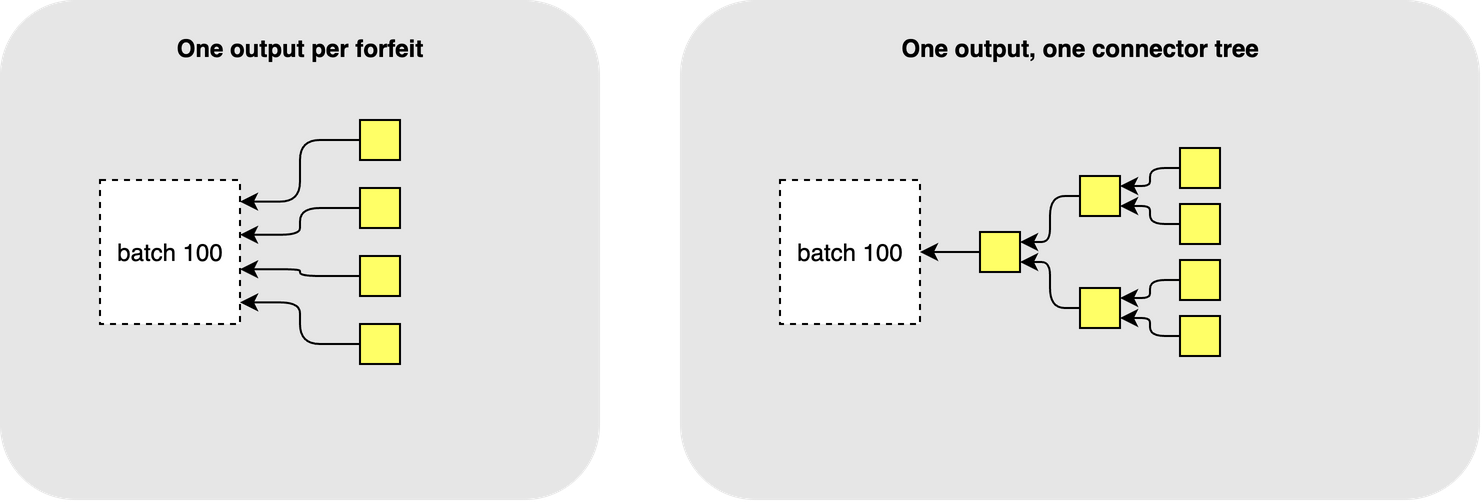
Which means a batch transaction ends up carrying two trees. The batch output pays to the VTXT holding everyone's new VTXOs, and the connector output pays to the connector tree holding the connectors for everyone's forfeits. Same construction, two very different jobs.
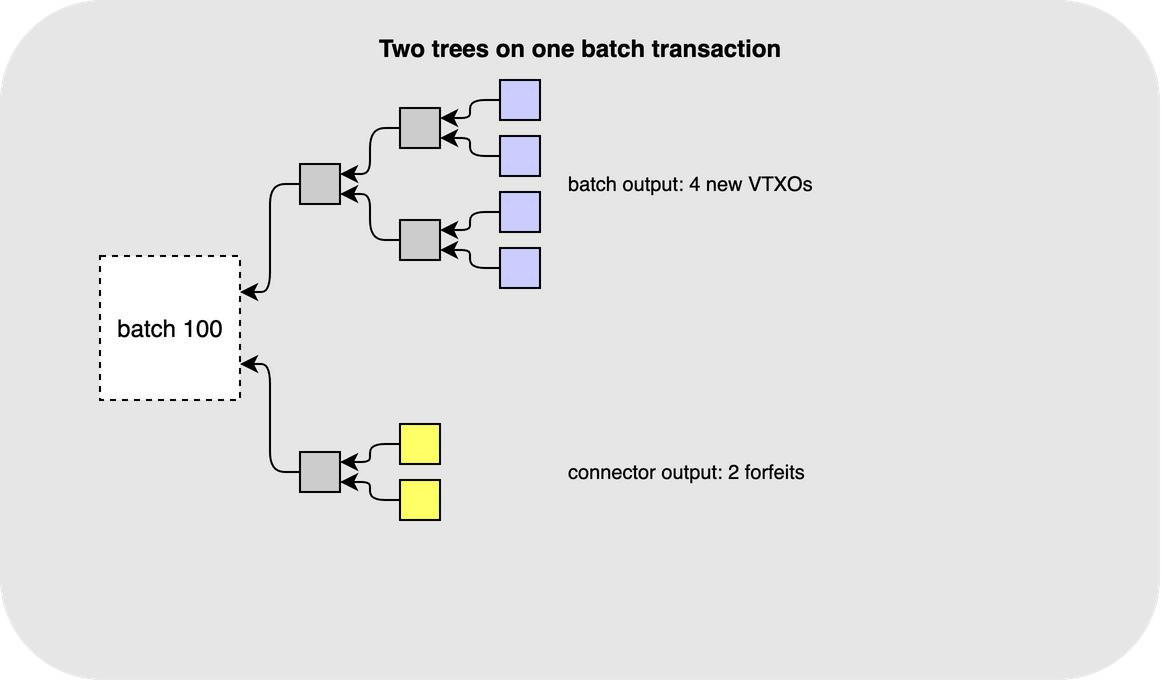
It is worth stressing that the sizes of these two trees have nothing to do with each other. The VTXT has one leaf per new VTXO being created in this batch, and the connector tree has one leaf per forfeit being processed. Those are different users doing different things, so there is no reason at all for the two counts to match. A batch might have no forfeits in it (everyone is boarding fresh funds) and so no connector tree, or no new VTXOs (everyone is leaving) and so no VTXT. And the VTXOs being forfeited will generally be scattered across many different older batches: the chances of every VTXO in one tree being refreshed at the same time are slim, and nothing about the protocol requires it.
Let's make that concrete. Say four users have each requested a forfeit in this batch. The operator builds them a connector tree with one leaf apiece:
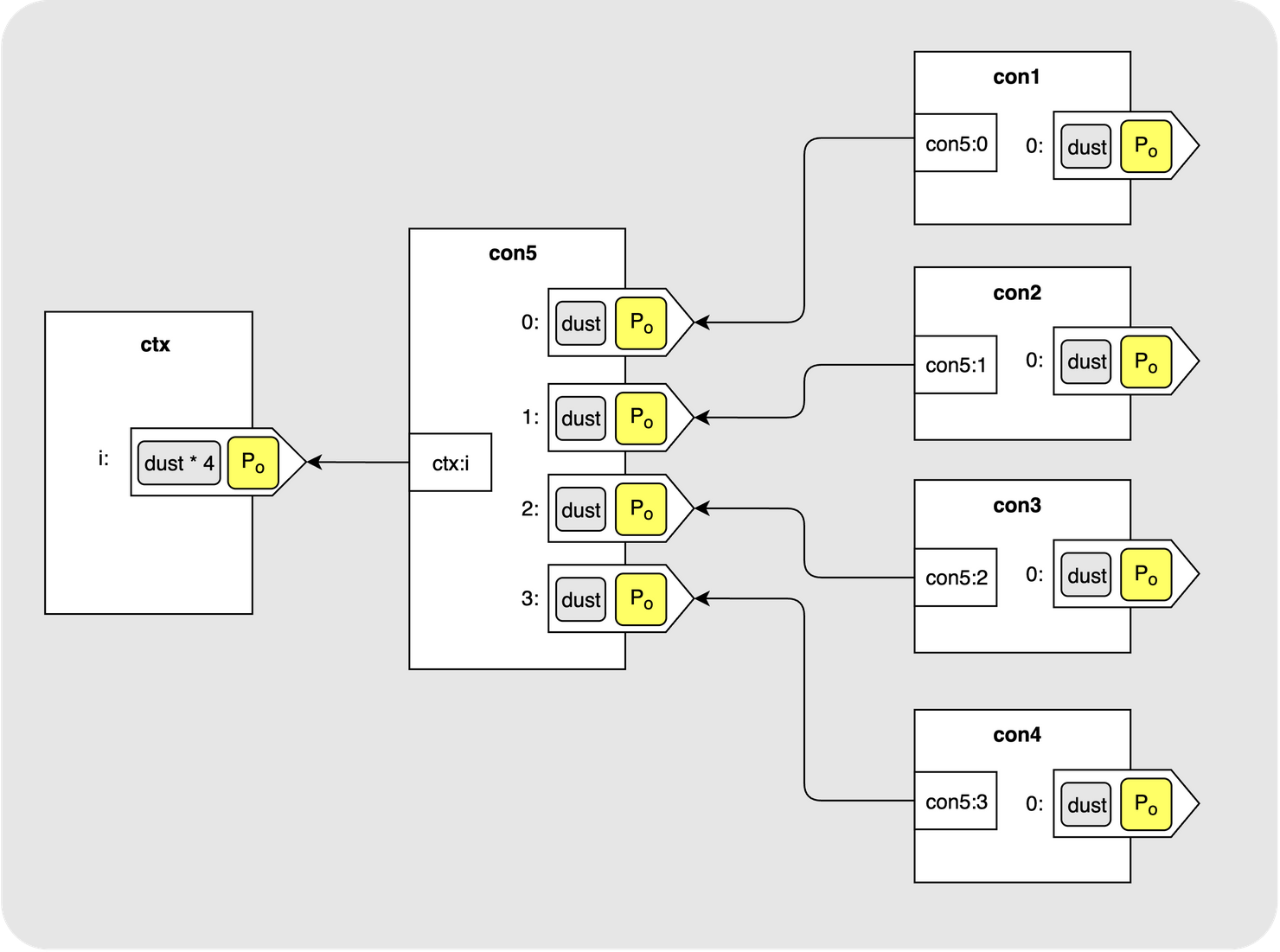
Every output in that tree is a plain dust output paying to the operator's key,
Po. That is the whole script. There is no sweep path and no
timelock, because there is nothing here to protect against. The operator owns
every output in this tree, from the root all the way down to the leaves, so there
is nobody to race and nothing to reclaim.
Just as with the VTXT, these diagrams leave one thing out. Every virtual transaction in the connector tree also carries a zero-value ephemeral anchor output. These transactions are all built with zero fees, so that anchor is how the operator attaches a fee via CPFP if it ever does need to get them confirmed on-chain.
The amounts are worth a word too. A connector carries no real value. Its only job is to be the second input of a forfeit transaction, so that the forfeit is worthless until the batch transaction is on-chain. So each leaf is a dust output, the smallest amount the network will relay, and the connector output on the batch transaction has to hold enough to fund all of the leaves below it: four forfeits, four times dust. A connector tree therefore costs the operator a small, fixed amount per forfeit.
That money is not gone, though. The connector output pays straight to the operator's own key, so the operator can spend it back to itself and recover the dust. It cannot do that immediately, though. Spending the connector output destroys the whole tree hanging below it, and with it every connector leaf, which would leave the operator holding forfeit transactions it can no longer broadcast. So it has to wait until none of those forfeits could still be needed, which means waiting until the batches the forfeited VTXOs came from have expired and been swept. After that the connector tree is dead weight and the operator can collect it, usually once enough of these outputs have accumulated to be worth the transaction fee.
Notice too that the connector tree does not have to use the same radix as the VTXT. The two trees are built for different reasons and sized by different things, so the operator is free to pick whatever shape suits the number of forfeits it is processing in this batch.
Now, each of those four users only needs one leaf. So the operator hands each of
them the chain of virtual transactions running from the batch transaction down to
their own connector, and nothing more. For the first of them that is ctx, then
con5, then con1:
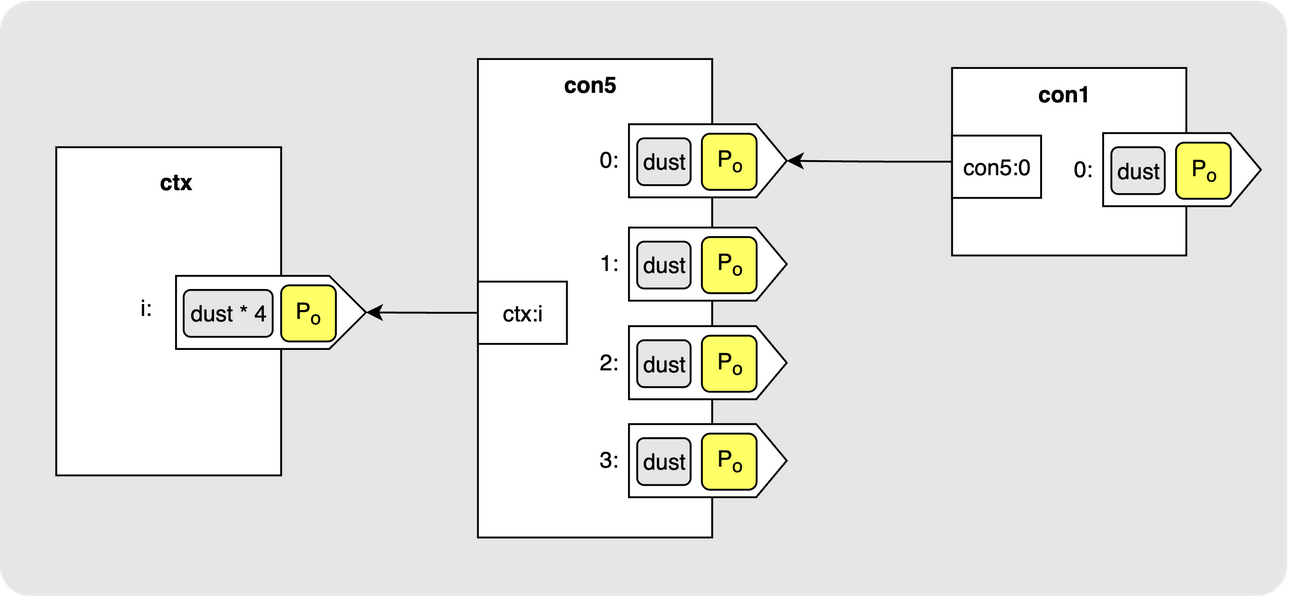
That chain is what proves to the user that their connector really does descend from this batch transaction. It is also exactly what gets broadcast if the connector ever does need to go on-chain.
And now that user can build their forfeit transaction. It takes two inputs:
vtx_a:0, the VTXO they are giving up, spent via its collaborative path, and
con1:0, the connector leaf they were just handed. Its single output pays the
value of the old VTXO across to the operator.
Leave Requests
Everything above used a Batch Swap as the example, but a leave request works in exactly the same way. The only thing that changes is what the operator puts in the new batch transaction for you.
In a Batch Swap you are given a fresh VTXO as a leaf of the new VTXT. In a leave request you are given a plain output on the batch transaction itself, paying you on-chain, and there is no restriction on the script you ask it to pay to.
Everything else is untouched. You still forfeit your old VTXO, the forfeit transaction still spends that VTXO together with a connector leaf from the new batch transaction, and the same atomicity holds: if the batch transaction confirms then your coins are on-chain and the operator can claim the old VTXO, and if it never confirms then your old VTXO is still yours.
Wrapping up
Forfeits and connectors are the machinery behind every move out of a batch, whether you are leaving the Ark entirely or just refreshing a VTXO that is running out of time. The forfeit transaction is the operator's insurance, and the connector is what stops that insurance from being worth anything until the new batch transaction is actually on-chain. One dependency, and the swap becomes safe in both directions at once.
Everything in this part has been about moving between batches. The next part is about what you can do without waiting for a batch transaction at all.